白夜行
书名:天行九歌|作者:笑无语|本书类别:古言|更新时间:14:01:32|字数:3896字
A | AI摘要 《生态环境法典》施行后,福州首例适用该法典的污染环境案在闽清宣判。某陶瓷公司篡改监测数据,单位及责任人因自首、积极修复生态获从轻处罚,法院借此开展普法警示。
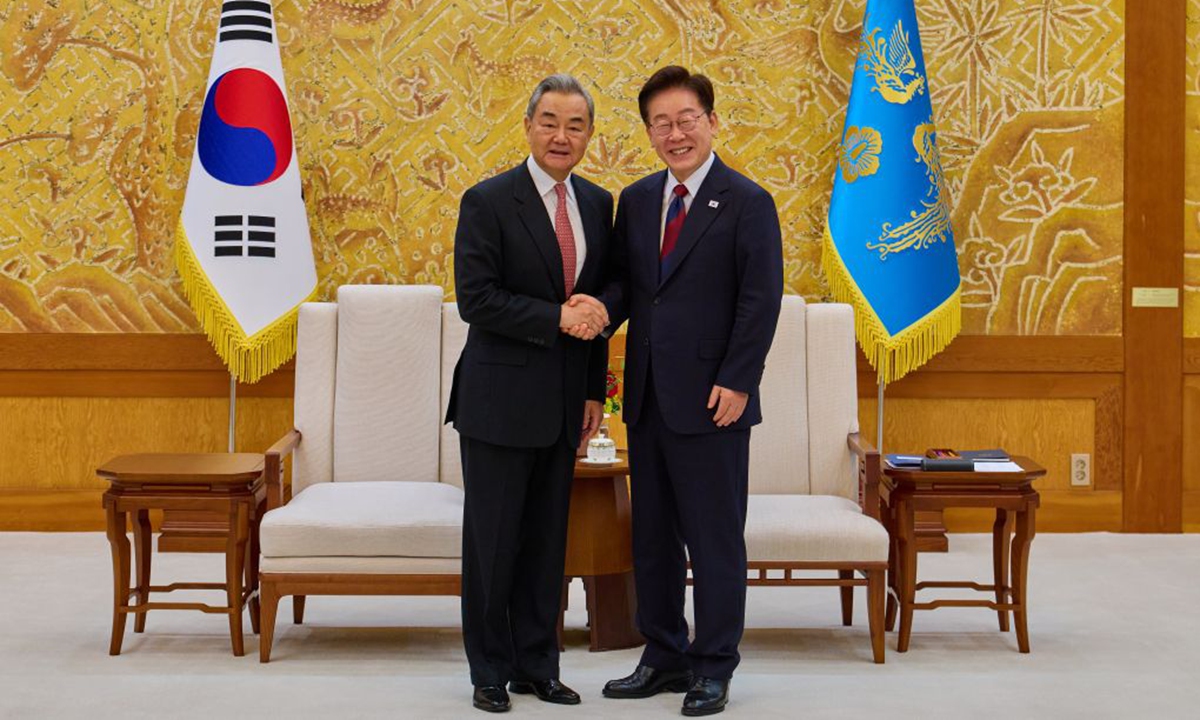
Chinese Foreign Minister Wang Yi, who kicked off his visit to South Korea on Wednesday, held talks with President Lee Jae-myung on Thursday, according to the Chinese Foreign Ministry.
The visit by Wang Yi is his first in five years since he last came to Seoul for bilateral talks with his South Korean counterpart in September 2021, according to South Korean media outlet Yonhap News Agency.
During the meeting, the South Korean president said that South Korea and China should become mutually dependent and mutually beneficial partners with complementary strengths, adding that the two countries need each other in areas such as economy, trade and security, according to the Xinhua News Agency.
Wang Yi, also a member of the Political Bureau of the Communist Party of China Central Committee, said the comprehensive restoration of China-South Korea relations and positive progress made since the beginning of this year have demonstrated that a rational, pragmatic and positive policy toward China fully serves South Korea's interests and is in keeping with the trend of the times.
During the visit, Wang also met with South Korean Foreign Minister Cho Hyun and Wi Sung-lac, South Korea's top presidential national security advisor.
Chinese analysts regard the latest senior-level engagements as "building on the past and paving the way for the future." Coming at a critical juncture amid shifting regional dynamics, it serves as a tangible follow-up to the two heads of state's efforts to restore bilateral ties and reflects the growing maturity of relations, they said.
Opportunity for greater progress
During the meeting, Lee told Wang Yi that he was glad to see China-South Korea relations improving and developing rapidly, with strong growth momentum in economic and trade cooperation. While highlighting that people-to-people exchanges between the two countries are expected to exceed 10 million this year, Lee said that South Korean public perceptions of China are improving and there are growing expectations for strengthening comprehensive cooperation with China, per Xinhua.
Lee added that he looks forward to visiting China's Shenzhen City in November for the 2026 APEC Economic Leaders' Meeting, calling it an important opportunity to work with China to advance the South Korea-China strategic cooperative partnership to a new level.
In his turn, the Chinese top diplomat told President Lee that he hopes South Korea will firmly pursue a friendly policy toward China and take the 35th anniversary of the establishment of diplomatic relations between the two countries next year as an opportunity to make greater progress in the China-South Korea strategic cooperative partnership.
Wang also noted that China is ready to share development opportunities with all countries, especially its neighbors. Amid growing global economic fragmentation and rising trade protectionism, Wang pointed out that China and South Korea should set an example by concluding the second phase of Free Trade Agreement (FTA) negotiations at an early date to promote regional economic integration and universally beneficial and inclusive economic globalization.
Since the two countries established diplomatic relations in 1992, their bilateral trade volume has increased more than 60 times. China has remained the South Korea's largest trading partner for 21 consecutive years, according to the Xinhua.
According to a Wednesday report by South Korean newspaper The Korea Herald, Seoul has also described Wang Yi's trip as an opportunity to build on the recent improvement in bilateral relations and prepare for further high-level exchanges.
Wang Junsheng, a researcher at the Chinese Academy of Social Sciences' National Institute of International Strategy, told the Global Times that this visit is anchored in key consensus forged during the reciprocal state visits by the two countries' heads of state. Wang Yi's trip can be seen as translating leaders' consensus into concrete action, and deepen exchanges and cooperation at all levels, he noted.
He also viewed the visit as encompassing coordination with Seoul on future preparations for November's APEC meeting, as Lee is expected to attend.
After previous setbacks, China-South Korea relations have recovered across political, economic, diplomatic and security spheres following the leaders' meetings, Yang Xiyu, a senior research fellow at the China Institute of International Studies, told the Global Times on Thursday.
"The highlight of Wang Yi's visit this time could be summarized as steady progress in the maturity of China-South Korea relations, laying firmer ground for expanded cooperation and difference management ahead," Yang added.
Hand in hand
On the international and regional front, Lee said that amid the current international situation, stronger strategic cooperation between South Korea and China serves the fundamental interests of both countries and is important for regional peace and stability, per Xinhua.
Wang Yi told Lee that as an important force for maintaining world peace, China consistently advocates the political settlement of international and regional conflicts through dialogue, adding that China is also a major stabilizing force, providing valuable certainty for the world.
During the Thursday meeting with Wi Sung-lac, South Korea's top presidential national security advisor, Wang Yi also expressed hope that South Korea will pursue genuine strategic autonomy, refrain from bloc confrontation or taking sides, and develop its relations with China, the US and other major countries in a mutually compatible manner, per Xinhua.
Wang Yi stressed that it is necessary to remain highly vigilant against the rhetoric and actions of Japan's right-wing forces that seek to turn back the wheel of history, and that the resurgence of Japanese militarism must never be allowed.
The Chinese top diplomat called on all parties to do more to facilitate the resumption of dialogue and restoration of mutual trust, expressing hopes that the Korean Peninsula will move toward peaceful coexistence between South Korea and the DPRK, ultimately achieving lasting peace and stability on the Korean Peninsula, Xinhua reported.
Yang told the Global Times that China is entering a new stage of development, while South Korea in effect stands at a crossroads amid shifts on regional security. For both countries, deepening cooperation is therefore of great significance, and the two sides will need to demonstrate greater political sincerity to expand cooperation and manage differences.
As long as the two sides uphold the vision of a shared future and maintain their independence, China-South Korean relations at this historic juncture can embark on a more solid, fruitful development path that benefits both nations, Yang continued.
He added that stable China-South Korea relations can reduce the risk of confrontation among Northeast Asian countries, build a solid regional cooperation framework, as well as serve as a model in the region.
Looking at the broader international landscape, conflicts persist in the Middle East and elsewhere, while protectionism and unilateralism are on the rise, disrupting and even severing global supply chains. Against this backdrop, China-South Korea cooperation is vital not only to maintaining stable regional supply chains but also to supporting stability at the global level, Wang Junsheng said.
Progress in China-South Korea cooperation will generate multiplier effects benefiting both countries and the wider region, while injecting positive momentum into the global economy amid rising protectionism, Yang echoed.
On the first day of his trip on Wednesday, Wang Yi met with Cho Hyun, who said in an X post on Thursday that they walked together along the Dasan Seongguwak-gil trail in Namsan and continued their conversation from yesterday.
"Despite the lingering late-summer heat, I hope walking along the trail — where the historical fortress wall, Namsan's lush forest, and Seoul's cityscape blend seamlessly —offered Minister Wang, an avid hiker, a memorable experience. For me, it was indeed a meaningful time to deepen our friendship too," he wrote.
Embracing China means embracing the future, and going hand in hand with China means going hand in hand with opportunities, Wang Yi said during the meeting with Lee.
。 15日,《中华人民共和国生态环境法典》正式施行,这是我国首部生态环境领域基础性、综合性法典。

B | 记者自闽清法院获悉,17日,闽清法院公开宣判一起篡改烟气在线监测数据污染环境案,该案系《生态环境法典》施行后,福州地区首例适用法典审理的污染环境刑事案件。 某陶瓷公司为市级重点排污单位,工厂内装有烟气监测系统。然而,为规避环保监管、隐瞒真实排污量,该公司实际控制人先后两次让分管副厂长及设备运维负责人配合更改烟气监测系统中的烟道横截面面积,造成在线监测数据严重失真,扰乱大气环境监管秩序。 案发后,三名被告人投案自首,如实供述全部罪行;涉案被告单位负责人主动到案,交代单位犯罪事实,自愿认罪认罚。同时,某陶瓷公司积极落实生态修复责任,主动与闽清县生态环境局签订《生态环境损害赔偿协议》,足额缴纳生态环境损害赔偿金25万余元。 庭审中,法庭围绕案件事实、证据认定及法律适用展开严谨调查,精准把握《中华人民共和国生态环境法典》与刑事法律的适用边界,充分考量法典确立的生态修复精神,综合考量被告人的自首情节以及被告单位积极履行生态修复义务等表现,依法判处某陶瓷公司、某环保公司罚金人民币35000元;三名被告也被判处有期徒刑八个月至拘役不等,并处相应罚金。 宣判后,闽清法院围绕本案与《中华人民共和国生态环境法典》开展现场普法宣讲。法官表示,企业是生态环境保护的第一责任人,必须牢固树立绿色发展理念,依法排污、诚信排污,摒弃“修改数据蒙混过关”的侥幸心理,任何篡改、伪造在线监测数据的弄虚作假行为,终将受到法律严惩。(记者 阮冠达)。


